
5. Binder Jetting

△binder jetting
Binder jetting is a 3D printing process in which a liquid binder selectively bonds areas of a layer of powder. This type of technology combines features of powder bed fusion and material jetting. Like PBF, binder jetting uses powdered materials (metals, plastics, ceramics, wood, sugar, etc.), and like material jetting, liquid binder polymers are deposited from an inkjet. Whether it's metal, plastic, sand, or other powdered materials, the binder jetting process is the same.
First, the recoat blade applies a thin coat of powder to the build platform. A printhead with inkjet nozzles then passes over the bed, selectively depositing droplets of binder to bind the powder particles together. After the layers are complete, the build platform moves down and the blade recoats the surface. Then repeat the process until the entire section is complete.
Binder jetting is unique in that there is no heat in the printing process. Binders act as the glue that holds polymer powders together. After printing, the part is encased in unused powder, which is usually left to cure. The part is then removed from the powder bin where excess powder is collected and can be reused. From here, post-processing is required, depending on the material, with the exception of sand, which can often be used as cores or molds directly from the printer. When the powder is metal or ceramic, post-processing involving heat melts away the binder, leaving only the metal. Post-processing of plastic parts often includes coatings to improve surface finish. You can also polish, paint and sand polymer binder jetted parts.
Binder jetting is fast and highly productive, so it can produce large numbers of parts more cost-effectively than other AM methods. Metal binder jetting can be used on a wide variety of metals and is popular in end-use consumer goods, tools and bulk spare parts. However, polymer binder jetting has limited material options and produces parts with low structural performance. Its value lies in the ability to produce full-color prototypes and mockups.
●Subtypes of 3D printing technology: metal binder jetting, polymer binder jetting, sand binder jetting
●Materials: sand, polymers, metals, ceramics, etc.
●Dimensional accuracy: ±0.2 mm (metal) or ±0.3 mm (sand)
●Common applications: functional metal parts, full-color models, sand castings and molds
●Advantages: low cost, large build volume, functional metal parts, excellent color reproduction, fast printing speed, design flexibility without supports
●Cons: A multi-step process for metals, polymer parts are not durable
1. Metal binder jetting

△HP 3D prints stainless steel parts using metaljet technology
Binder Jetting can also be used to fabricate solid metal objects with complex geometries far beyond the capabilities of traditional fabrication techniques. Metal binder jetting is a very attractive technology for mass production and lightweighting of metal parts. Because binder jetting can print parts with complex patterned fills rather than solids, the resulting parts are significantly lighter in weight yet retain the same strength. The porosity feature of binder jetting can also be used to achieve lighter end parts for medical applications, such as implants.
Overall, the material properties of metal bond jetting parts are comparable to metal parts produced by metal injection molding, and it is one of the most widely used manufacturing methods for mass production of metal parts. In addition, binder jetted parts exhibited higher surface smoothness, especially in internal channels.

△Metal binder jetting 3D printers produce finely detailed solid metal parts for end-use applications
Metal binder jetted parts require secondary processing after printing to achieve good mechanical properties. Fresh off the printer, the part basically consists of metal particles held together with a polymer binder. These so-called "green parts" are fragile and cannot be used as-is. After the printed parts are removed from the metal powder bed (a process called depowdering), they are heat-treated in a furnace (a process called sintering). Both printing and sintering parameters are tuned to the specific part geometry, material and desired density. Bronze or other metals are sometimes used to infiltrate the voids in the binder jetted part, resulting in zero porosity.
2. Plastic binder jetting
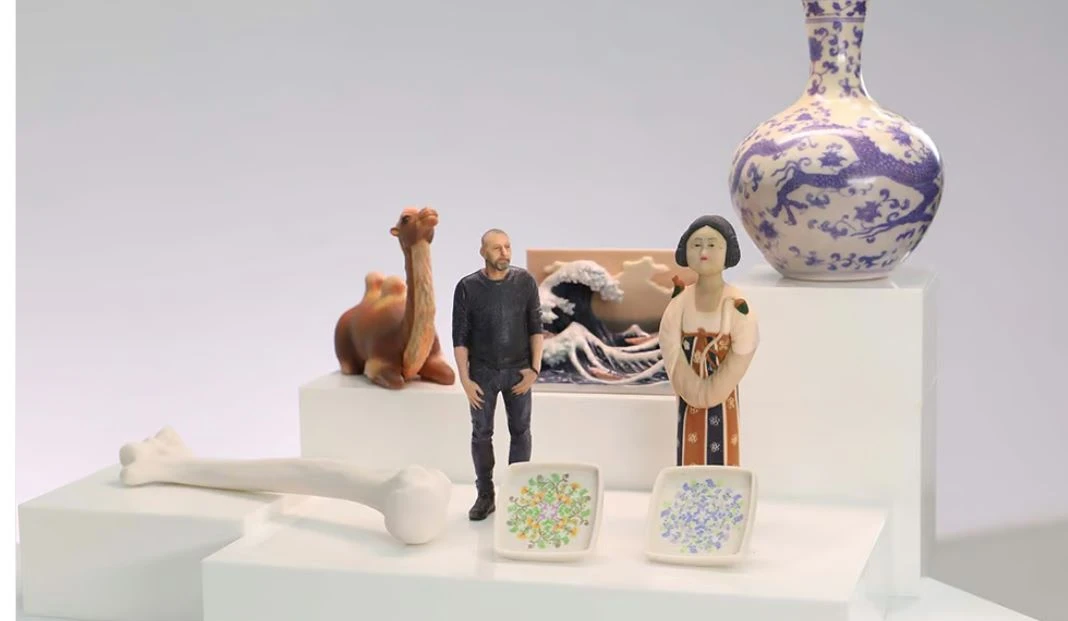
△Plastic Binder Jetting
Plastic binder jetting is a process very similar to metal binder jetting in that it also uses powder and liquid binders, but the application is quite different. After printing, the plastic parts are removed from their powder bed and cleaned, often ready to be used without further processing, but these parts lack the strength and durability found in the 3D printing process. Plastic binder jetted parts can be filled with another material for strength. The use of polymers for binder jetting is due to its ability to produce multi-colored parts for medical modeling and product prototyping.
3. Sand binder jetting

△sand binder jetting
Sand binder jetting differs from plastic binder jetting in terms of printers and printing processes, so they are differentiated here. The production of large sand casting molds, patterns and cores is one of the most common uses of binder jetting technology. The low cost and speed of the process make it an excellent solution for foundries, as it is difficult to produce fine pattern designs in a few hours using traditional techniques.
The future of industrial development continues to place high demands on foundries and suppliers. Sand 3D printing is at the beginning of its potential. After printing, the print crew needs to remove the core and mold from the build area and clean to remove any loose sand. Molds are usually ready for casting in no time. After casting, the mold is taken apart and the final metal parts are removed.
4. Multiple Jet Fusion (MJF)

△BASF and HP collaborate to develop a new industrial grade polypropylene for MJF
Another unique and brand-specific 3D printing process that doesn't fall easily into any existing category, and isn't actually binder jetting, is HP's Multi Jet Fusion. MJF is a polymer 3D printing technology that uses powder materials, liquid fusion materials and refiners. The reason it's not considered binder jetting is the heat added to the process, which creates a stronger and more durable part, and the liquid isn't quite an adhesive. The process gets its name from the multiple inkjet heads that perform the printing process.
During Multi Jet Fusion printing, the printer lays down a layer of material powder, usually nylon, on the print bed. After this, an inkjet head passes through the powder and deposits melting agent and refiner on it. The infrared heating unit then moves over the print. Wherever the flux is added, the lower layers fuse together, while the areas with the refiner remain powdery. The powdery part is exfoliated, resulting in the desired geometry. This also eliminates the need for modeling support, as lower layers support layers printed on top of them. To complete the printing process, the entire powder bed, and the printed parts within it, are moved to a separate processing station, where most of the loose unfused powder is vacuumed and can be reused.
Multi Jet Fusion is a versatile technology with applications in several industries including automotive, healthcare and consumer goods.
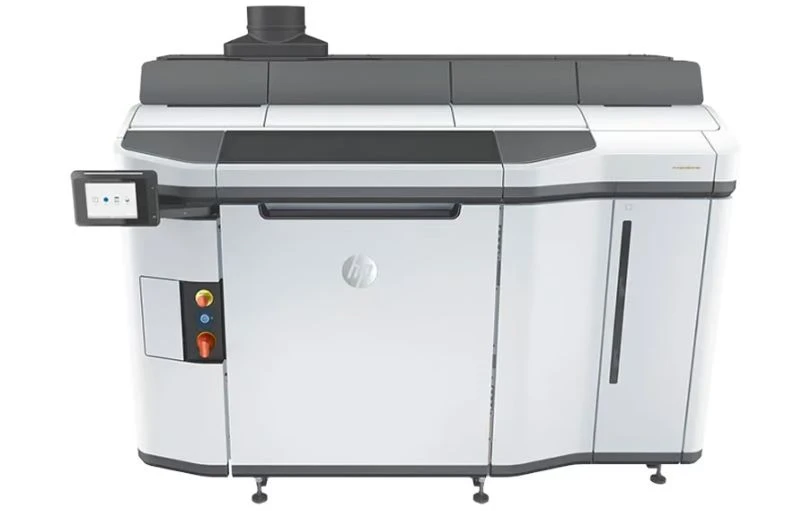
△The HP Jet Fusion 5200 series is one of several sizes and styles of HP Multi Jet Fusion 3D printers (Source: HP)


