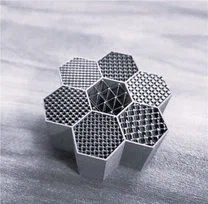
On March 26, 2025, Chinese 3D printing pharmaceutical company Triastek announced that its proprietary 3D printed non-vitamin K antagonist oral anticoagulant (NOAC) T20G had been approved for new drug clinical trials (IND) by the U.S. Food and Drug Administration (FDA) on February 27, 2025 and the China National Medical Products Administration (NMPA) in January 2024.

Dr. Deng Fei Huang, Vice President of Technology at Triasone, said: "The IND approvals for T20G in China and the U.S. mark a major milestone for us in the field of gastric retentive drug delivery. These two regulatory approvals will accelerate the development of T20G and enable us to provide high-quality drug solutions to patients worldwide."

Atrial fibrillation is the most common type of cardiac arrhythmia worldwide, affecting approximately 1% to 2% of the population, with an estimated number of cases worldwide ranging from 30 million to 100 million. Anticoagulation therapy plays a key role in preventing stroke in patients with atrial fibrillation, and novel oral anticoagulants (NOACs) have become the preferred treatment option due to their improved safety and efficacy compared to traditional treatments. Therefore, major medical organizations such as the American Heart Association (AHA), the European Society of Cardiology (ESC), and the Asia Pacific Heart Rhythm Society (APHRS) recommend NOACs as the first-line treatment for stroke prevention in patients with atrial fibrillation.
T20G was developed through the U.S. FDA's 505(b)(2) New Drug Application (NDA) pathway, using an advanced drug delivery system. Triastomosis owns the intellectual property rights of T20G and has exclusive global commercialization rights.
T20G uses Trias' melt extrusion deposition microinjection molding (MED&MIM) process, combined with the 3D gastric retention microstructure (3DμS®-GR) platform, to achieve a once-daily oral administration method. This design is different from the existing twice-daily dosing regimen on the market, and its purpose is to improve patients' medication compliance and convenience. During the gastric retention stage, T20G can promote the sustained release of active ingredients, aiming to optimize absorption in the upper gastrointestinal tract and improve oral bioavailability.

Since 2015, Tridex has been focusing on the development of 3D printed solid dosage forms, and has filed 213 patent applications in 10 countries, of which 68 have been granted. Its MED 3D printing technology combined with 3D microstructure design can precisely control drug release characteristics, including delay layer materials, thickness and composition. Compared with traditional tablet formulation methods, this method can achieve a variety of drug release profiles (immediate, continuous or pulsed) with flexibility.
In addition to T20G, Triastek is also making progress in the field of 3D printed drug delivery. Currently, Triastek has five 3D printed products (T19, T20, T21, T22 and D23) that have obtained IND approval. Last year, Triastek worked with Eli Lilly to advance the development of 3D printed oral drugs for the gastrointestinal tract. This collaboration uses Triastek's melt extrusion deposition technology to create formulations that can release drugs in specific parts of the digestive system as needed. By precisely controlling the rate and time of drug release, the efficacy and safety of the drug can be optimized, side effects can be reduced, and patient compliance can be improved.
In general, by customizing the drug release profile, it is possible to ensure that the drug reaches the desired concentration at the right time and location, thereby improving the therapeutic effect. This personalized and precise drug delivery method is an important application of 3D printing technology in the pharmaceutical field, which can provide patients with more effective treatment options.